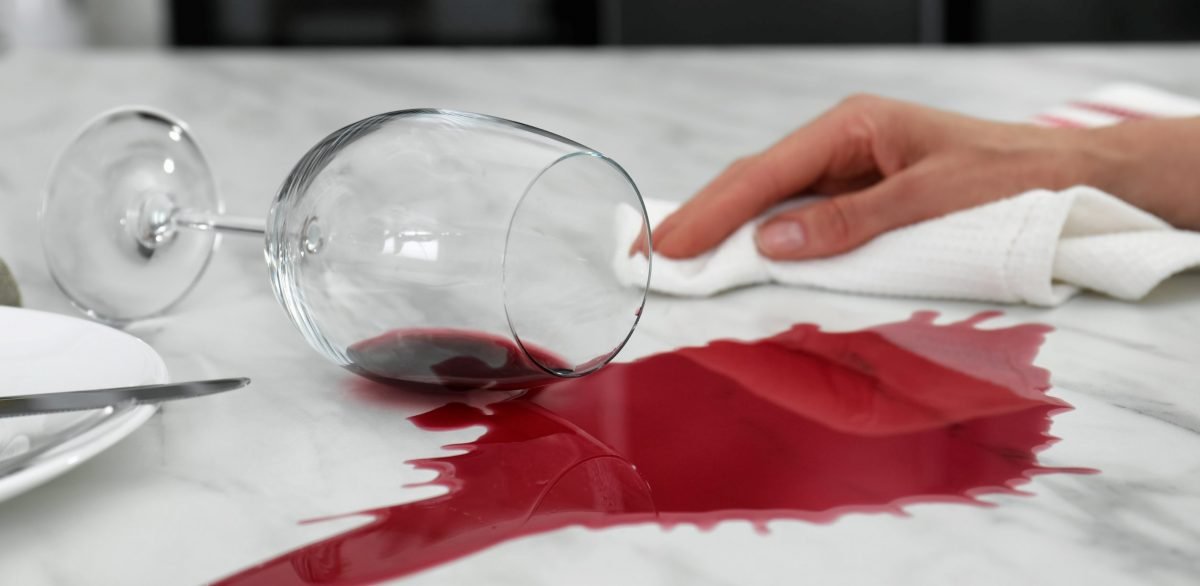
Marble is a beautiful natural stone that can make a kitchen or bathroom feel bright and high-end. But marble is also more delicate than many people expect. It can stain, dull, or darken when certain liquids soak into it.
Marble is made mostly of calcium carbonate. It is a “softer” stone compared to granite, and it is naturally porous. That means it has tiny openings that can absorb liquids. Even when marble looks smooth and shiny, it can still pull moisture below the surface.
Another issue is that marble reacts with acids. Acid does not always leave a dark stain. Instead, it can cause etching, which is a lighter, dull spot where the surface has been chemically worn away. People often confuse etching with staining because both can look like damage.
Some of the most common stain-causers include:
You do not have to be afraid of marble, but you do need good habits.
If a stain appears, act quickly. For many stains, a poultice (a paste that pulls the stain out) can help. Oil stains, rust stains, and organic stains may each need different treatments. If you are unsure, it is best to ask a stone professional so you do not accidentally make the damage worse.
Daily care and sealing help, but marble is still vulnerable in busy kitchens and bathrooms. For long-term protection against permanent stains, consider Opal Premium. It is designed to create a stronger barrier that helps guard marble from the liquids and oils that commonly cause deep stains. With the right protection in place, marble is much easier to maintain, and you can enjoy the look of natural stone without feeling like every spill is a disaster.
In short, marble stains because it absorbs liquids and reacts to acids. The best protection is a mix of good cleaning habits, quick spill response, and a durable long-term protective treatment like Opal Premium.
