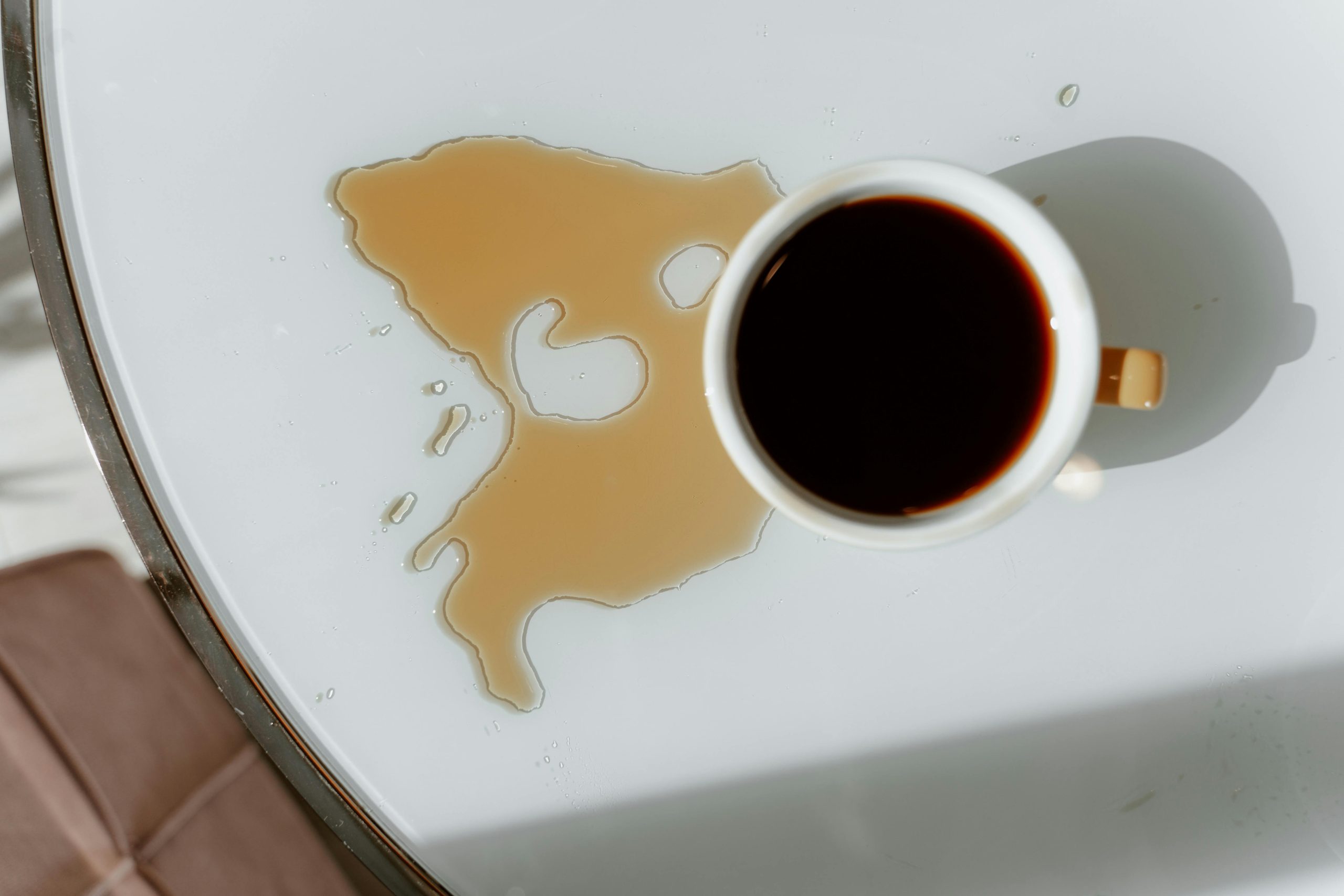
Etching is one of the most common problems people notice on marble countertops. You might see a dull spot, a light “water mark,” or a cloudy ring where a drink or cleaner sat. The good news is that etching is usually fixable, and you can take steps to stop it from happening again.
Marble is made mostly of a mineral called calcite. Calcite reacts when it touches acids. When an acidic liquid sits on marble, it slightly dissolves the very top surface. This does not usually remove a chunk of stone, but it changes the shine. That change in shine is called an etch.
Etching is different from a stain. A stain is when a colored liquid soaks into the stone and changes the color. An etch is more like a “burn mark” on the polish. Because marble is softer than many other stones, etches can happen quickly.
Many everyday items are acidic enough to etch marble, including:
Even if you wipe it up later, the damage can already be done if the liquid sat for a few minutes.
If you see a dull spot or ring, try these steps:
Prevention is mostly about barriers and habits:
Many homeowners also choose a long-term protective treatment. Opal Premium is a strong option if you want ongoing protection against etching. It creates a durable protective layer that helps reduce the chance that acidic liquids will contact the marble’s surface directly. That means fewer dull spots, easier cleanup, and a countertop that keeps its polished look longer.
Marble is beautiful, but it needs the right care. If you handle etches quickly and protect the surface with smart habits and a long-lasting solution like Opal Premium, your countertops can stay bright and elegant for years.
