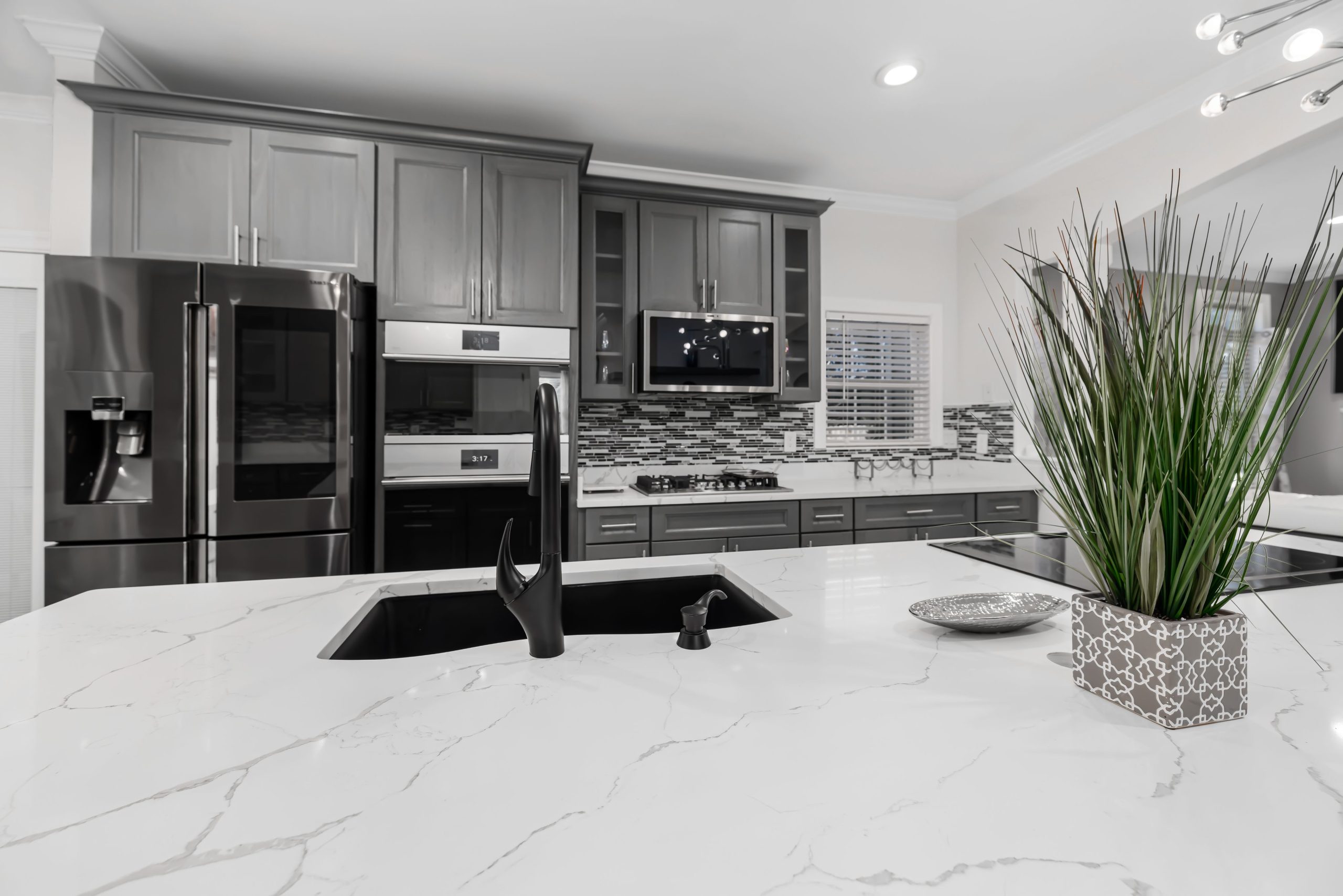
Protecting Your Marble Investment - Marble countertops look beautiful, but marble is also a soft, porous stone. That means it can soak up liquids, stain, and lose its shine if it is not protected. Sealing your marble is one of the best ways to protect your investment and keep your kitchen or bathroom looking great for years.
Marble is made mostly of calcium carbonate. It can absorb water, oils, and colored liquids like coffee or wine. It can also react to acidic foods and cleaners. Lemon juice, vinegar, tomato sauce, and some bathroom products can leave “etch marks,” which look like dull spots in the stone. A good sealer helps slow down absorption, giving you time to wipe up spills before they turn into stains.
A sealer is not a thick coating like paint. Most marble sealers soak into the stone and fill tiny pores. This makes it harder for liquids to sink in.
Sealing helps with:
Sealing does not fully prevent:
That’s why sealing works best when it’s combined with good daily habits.
You can do a simple “water test.” Put a few drops of water on the counter in an area you don’t mind testing. Wait 10–15 minutes.
Always follow the directions on the product you choose, but the process usually looks like this:
If you want protection that goes beyond typical sealers, consider Opal Premium. Opal Premium is designed to permanently protect marble countertops by creating a durable, long-lasting barrier that helps guard against staining and everyday wear. This can be a great choice for busy kitchens and bathrooms where the counter sees constant use.
The main benefit is peace of mind: instead of remembering to test and reseal on a schedule, Opal Premium offers a more permanent approach to protecting the surface and keeping marble looking its best.
Marble is a premium material, and it deserves premium care. Sealing your countertop, cleaning it the right way, and using simple daily protections can make a big difference. For homeowners who want the strongest, long-term defense, Opal Premium is a smart option to permanently protect your marble countertop and help you enjoy its beauty with less worry.
